
Should You File an Insurance Claim for a Fender Bender?
Sometimes yes, sometimes absolutely not. Here's how to decide with real numbers instead of guesswork.
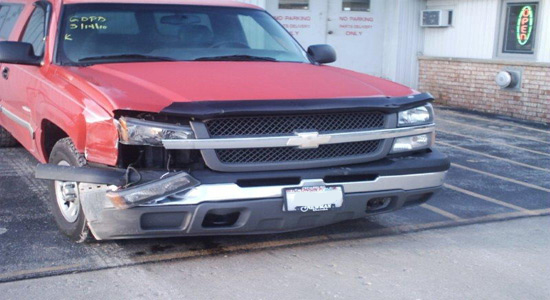
You backed into a pole at the grocery store, or someone tapped you at a light on 27th Street. The damage isn't catastrophic — a dented bumper, a scraped fender. Now the real question: do you call your insurance company, or just pay for the repair yourself?
After sixty years of helping Franklin and Milwaukee-area drivers through this exact decision, here's the framework we walk customers through.
Step 1: Get the Real Repair Cost First
You can't make this decision without knowing what the repair actually costs — and people routinely guess wrong in both directions. A bumper scuff that looks terrible might buff out for a couple hundred dollars; a "small" dent hiding a cracked bracket might not.
This is exactly what a free written estimate is for. It commits you to nothing, and it turns the rest of this article from theory into arithmetic. (Ballpark ranges are in our Wisconsin repair cost guide.)
Step 2: Compare Against Your Deductible
The math starts simple: insurance only helps with the portion of the repair above your deductible.
- Repair estimate $900, deductible $500 → insurance covers $400.
- Repair estimate $900, deductible $1,000 → insurance covers nothing. Don't file.
If the claim barely clears your deductible, you're taking on the downsides of a claim (below) for a small payout. Most people in that spot are better off paying out of pocket.
Step 3: Factor In What a Claim Can Cost You Later
An at-fault claim typically follows you for three to five years on your record. Depending on your insurer and history, an at-fault surcharge can raise premiums meaningfully at renewal — and it can also cost you a claims-free discount you didn't realize you had. Multiply any increase by the years it sticks around, and a $400 insurance payout can quietly cost more than it paid.
Two important exceptions:
- Not-at-fault and comprehensive claims (the other driver hit you, hail, deer, vandalism) are treated differently and often don't carry at-fault surcharges. If the other driver is at fault, their liability insurance should pay — and their claim doesn't touch your deductible at all.
- Anything involving injuries or another party changes the calculation entirely — see below.
When You Should Always Involve Insurance
Paying out of pocket is a money decision, not a secrecy strategy. Report the accident and use your coverage when:
- Another person or vehicle is involved — even a "we're cool, no big deal" handshake can turn into a claim against you weeks later. Notifying your insurer protects you.
- Anyone might be injured, even slightly.
- The damage might be structural — if the impact was hard enough to push panels out of alignment, the repair can escalate beyond cosmetic work. Our collision repair estimates flag this early.
- The costs are simply big — that's what insurance is for.
A Quick Decision Cheat Sheet
| Situation | Usually the right call |
|---|---|
| Solo mishap, repair less than or near your deductible | Pay out of pocket |
| Solo mishap, repair well above deductible | Weigh surcharge vs. payout; often file |
| Other driver at fault | Claim on their insurance |
| Hail, deer, vandalism (comprehensive) | Usually file — different surcharge rules |
| Any injuries or disputes | Always report it |
Either Way, the Repair Works the Same
Whether it's an insurance job or out of pocket, the repair itself — and our lifetime guarantee on it — is identical. We work with all insurance companies, we'll send them our estimate and photos directly if you file, and we offer free loaner cars either way. If you're not sure which way to go, bring the car in: we'll give you the written number that makes the decision easy, free.
Curious what the full repair timeline looks like if you do file? Read what happens after a car accident, step by step.
Get the Number That Makes the Decision Easy
Free written estimate at 8595 S 27th St., Franklin — no appointment necessary. Then decide claim vs. cash with real math.